
Why Worcester Matters in the Intermodal Supply Chain
Posted on: October 22, 2026
I love infrastructure—especially the kind that keeps freight moving. I’ve visited and toured dozens of intermodal terminals and rail yards across the country. They’re amazing hubs of activity, combining heavy equipment, technology, and people to keep our supply chains running.
It’s easy to understand why major terminals developed in places like New Jersey, Long Beach, and Savannah. They connect ocean shipping with large populations, industry, and markets. Chicago makes sense, too: it’s a major meeting point for railroad networks carrying freight across the country.
But what about Worcester? How did a landlocked city in Central Massachusetts become an important link in international container transportation?
A Railroad Connection Nearly Two Centuries in the Making
The story starts long before shipping containers.
In 1835, the Boston and Worcester Railroad completed its line between the two cities. Rail service extended west to Springfield in 1839, helping establish a corridor connecting Boston with inland markets.
Over the following decades, that corridor became part of larger railroad networks. The Boston and Albany, New York Central, Penn Central, Conrail, and eventually CSX each played a part in its evolution.
Worcester’s location put it at the intersection of transportation routes—a role that would become increasingly valuable as freight transportation changed.
From Individual Shipments to Shipping Containers
A defining moment in modern container shipping came in 1956, when Malcom McLean’s Ideal X sailed from Port Newark to Houston carrying 58 containers.
The idea was simple but powerful: move the container between transportation modes without repeatedly unloading and handling the goods inside. That approach helped transform global trade.
By 1963, Worcester was listed in New York Central’s Flexi-Van terminal network alongside Boston and Springfield. Flexi-Van used detachable freight bodies that could be transferred between road chassis and specially equipped railcars. It looked different from today’s double-stack trains, but the principle was familiar: connect road and rail while keeping the freight inside the same unit.
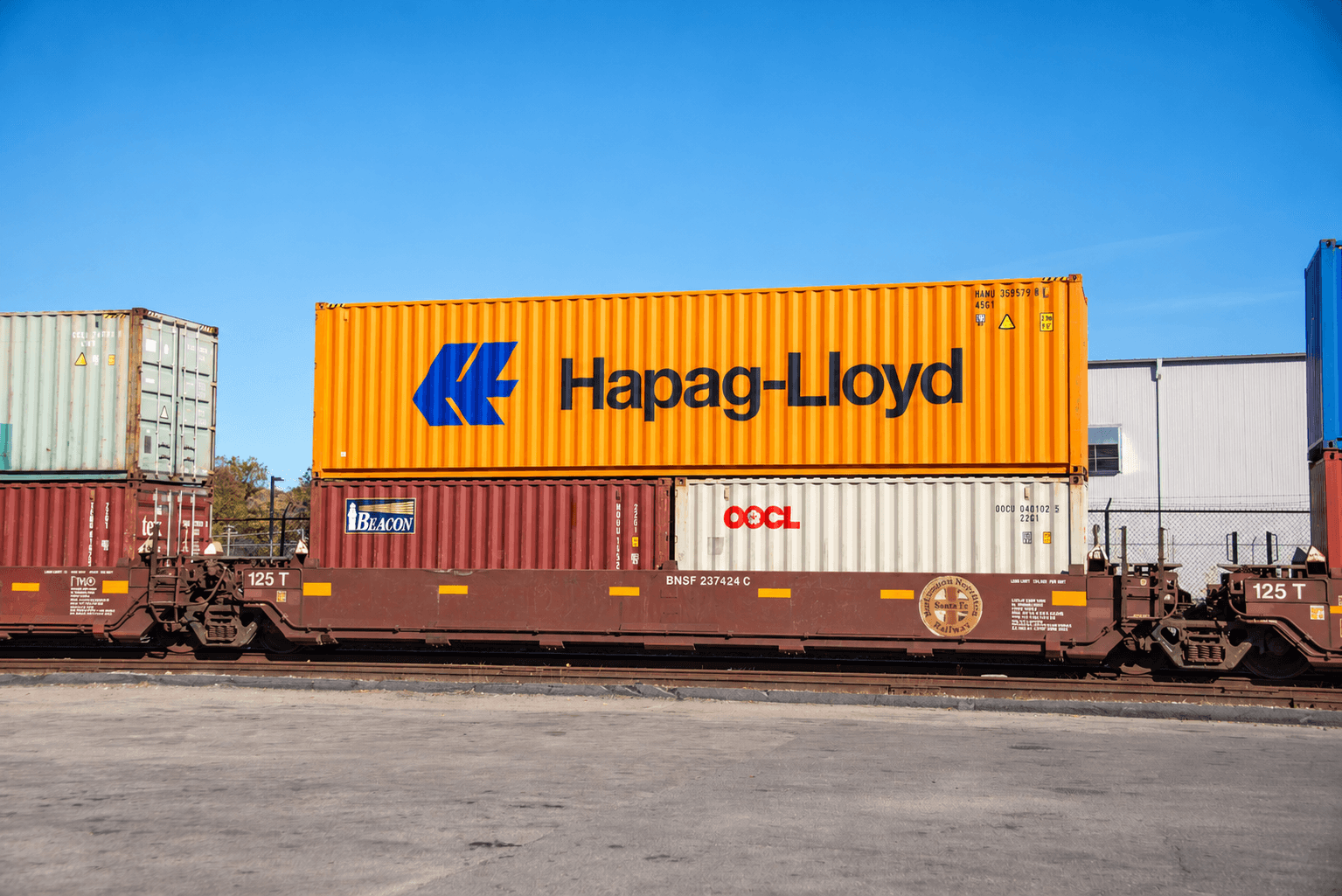
In 1987, Intransit Container and the Providence & Worcester Railroad established a dedicated 12-acre double-stack container terminal adjacent to Southbridge Street. It was a significant milestone in Worcester’s development as a gateway for international freight.
Connecting the West Coast With New England
As container transportation grew, ocean carriers and railroads developed landbridge routes connecting coastal ports with distant markets.
For New England-bound cargo arriving at West Coast ports, this created an alternative to an all-water journey through the Panama Canal to an East Coast port. Containers could leave the ship on the Pacific Coast, travel east across the country by rail, and complete their journey by truck.
You’ll often hear this described as a mini landbridge. More precisely, an inland destination such as Worcester may be called a microbridge movement. Either way, the practical idea is the same: connect ocean, rail, and truck transportation to reach the customer.
The best routing depends on the shipment, schedules, and costs. For suitable freight, the overland rail journey provides a valuable alternative to keeping the container aboard a vessel for the longer ocean route.
Why the Rail Journey Ends in Worcester
Infrastructure helps explain Worcester’s role.
On the rail corridor east toward Boston, low bridges and other clearance restrictions limit the movement of double-stack container trains. Worcester provides a place to transfer containers from long-distance rail service to trucks for delivery throughout New England.
The western approach once presented clearance challenges, too. Before CSX completed improvements announced in January 2013, double-stack trains approaching New England from western and Midwest origins had to be rearranged into single-stack configurations in Syracuse.
Those improvements allowed double-stack trains to reach CSX’s expanded Worcester terminal without that additional handling. They strengthened an intermodal business that was already established here.
The Connection Continues Beyond the Tracks
That history still matters today.
A container’s arrival by rail is one step in a much larger journey. Trucking, depot services, storage, and coordinated delivery connect the terminal with the customer.
That’s where Intransit’s connected services come into play. We help carry that journey forward—handling containers that may have originated halfway around the world and connecting them with businesses throughout New England.
For a city without an ocean harbor, Worcester has a remarkable connection to global trade.